
Choosing the right interior design style can completely change the way a home looks, feels, and functions. From clean and minimal spaces to warm traditional interiors and luxurious contemporary homes, there are many options to explore. But with so many choices available, deciding which style suits your space can sometimes feel confusing.
Understanding different interior design styles is the first step toward creating a home that reflects your personality and lifestyle. The right style should not only look beautiful but should also work with your home’s layout, natural light, furniture, storage needs, and budget.
If you’re looking for professional interior design services, understanding your preferred style can also help you communicate your ideas more clearly with a designer.
In this guide, we explore popular interior design styles, their key characteristics, and practical tips to help you choose a style that works for your home.
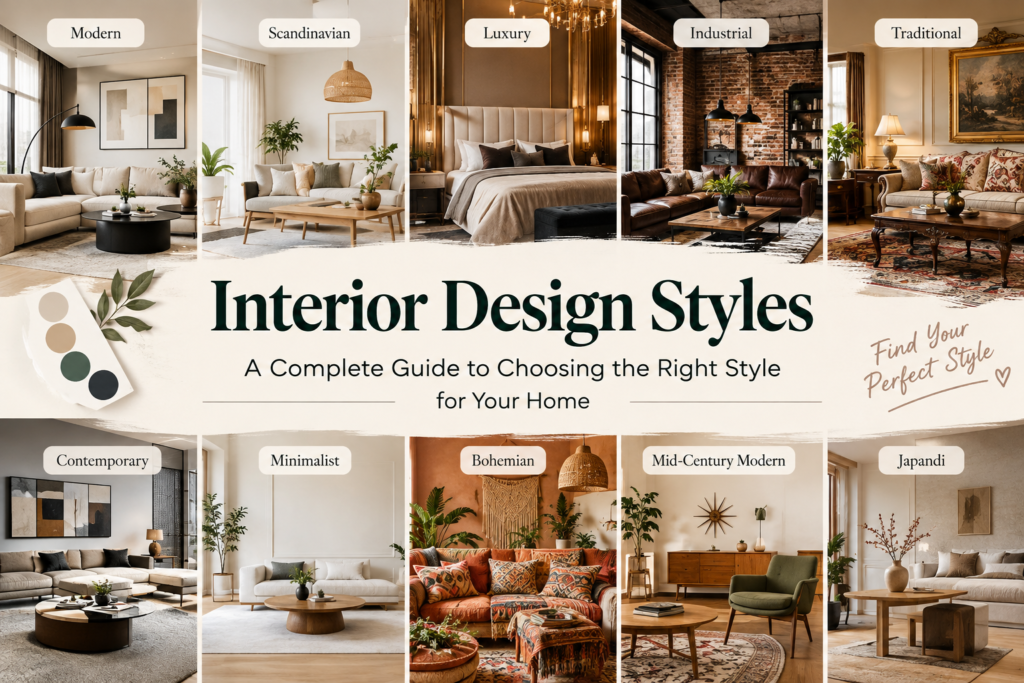
What Are Interior Design Styles?
Interior design styles are distinct approaches used to create a particular look, atmosphere, and functionality within a space. A style can influence everything from furniture and colours to materials, lighting, textures, and decorative elements.
Some homeowners prefer one clearly defined style, while others combine elements from multiple styles. For example, a modern living room can include traditional artwork, while a minimalist bedroom can incorporate warm wooden furniture.
There is no single style that is suitable for every home. The best choice depends on your personal preferences, lifestyle, available space, and practical requirements.
Why Choosing the Right Interior Design Style Matters
Your interior design affects more than just the appearance of your home. A well-planned space can support your daily routine and make rooms feel more comfortable and organised.
When exploring interior design styles, consider these factors:
- Your personal taste
- Size and layout of the space
- Natural and artificial lighting
- Furniture requirements
- Storage needs
- Maintenance preferences
- Available budget
- Long-term functionality
For example, someone who prefers a clean and uncluttered home may enjoy minimalist interiors, while someone who likes decorative details and classic furniture may prefer traditional design.
10 Popular Interior Design Styles to Explore
1. Modern Interior Design
Modern interior design is known for clean lines, practical layouts, simple furniture, and a balanced appearance. It generally avoids unnecessary decoration and focuses on purposeful design.
Neutral colours such as white, grey, beige, and black are commonly used, although accent colours can add personality.
Modern interiors can work particularly well for homeowners who prefer an organised and contemporary environment.
Key features:
- Clean lines
- Simple furniture
- Neutral colour palettes
- Functional layouts
- Minimal decorative elements
2. Contemporary Interior Design
Contemporary design focuses on current design ideas and can change as trends and preferences evolve. It often combines different materials, shapes, textures, and colours.
Unlike a strictly defined historical style, contemporary interiors can be flexible. Glass, wood, metal, stone, and textiles can be combined to create a sophisticated environment.
When considering different interior design styles, contemporary design can be a useful option for people who want a fresh and adaptable look.
3. Minimalist Interior Design
Minimalist design focuses on simplicity, functionality, and purposeful choices. Instead of filling a room with furniture and accessories, minimalist interiors usually focus on essential elements.
The colour palette is often restrained, while clean surfaces and uncluttered layouts help create a calm appearance.
Minimalism does not necessarily mean having an empty room. The goal is to ensure that every element has a clear purpose.
Common features include:
- Simple furniture
- Open space
- Limited décor
- Neutral colours
- Practical storage
- Clean visual lines
4. Traditional Interior Design
Traditional interiors are inspired by classic design elements and often feature detailed furniture, warm colours, decorative accessories, and timeless materials.
This style can create a comfortable and welcoming atmosphere. It may work particularly well for people who appreciate classic furniture, patterns, rich textures, and decorative details.
Traditional design can also be combined with modern elements to create a more updated appearance.
5. Luxury Interior Design
Luxury interior design focuses on creating an elegant and sophisticated environment through thoughtful planning, quality materials, refined finishes, and carefully selected furniture.
Luxury does not simply mean using expensive products. Proportion, lighting, material selection, craftsmanship, and attention to detail are important aspects of a well-designed luxury interior.
Popular elements may include:
- Statement lighting
- Premium finishes
- Elegant furniture
- Natural stone
- Metallic accents
- Layered textures
- Custom-designed features
6. Scandinavian Interior Design
Scandinavian design is associated with simplicity, functionality, natural materials, and comfortable living spaces.
Light colours, natural wood, simple furniture, soft textiles, and plenty of natural light are commonly incorporated into this style.
If you want an interior that feels simple, bright, warm, and functional, Scandinavian design can be worth exploring.
7. Industrial Interior Design
Industrial interiors take inspiration from warehouses, factories, and urban spaces. Exposed materials and practical architectural elements are often used as part of the design.
Common features include metal, exposed brick, concrete finishes, wood, open layouts, and statement lighting.
This style can create a bold and urban atmosphere while still allowing plenty of flexibility with furniture and décor.
8. Bohemian Interior Design
Bohemian, or boho, interiors are generally relaxed, expressive, and rich in textures and patterns. They can incorporate plants, textiles, artwork, handmade objects, rugs, and decorative accessories.
Unlike more structured interior design styles, bohemian design allows greater freedom to mix colours, patterns, materials, and cultural influences.
The result can be an expressive space with a personal and collected appearance.
9. Mid-Century Modern Interior Design
Mid-century modern design is recognised for simple forms, functional furniture, organic shapes, and a strong connection between design and everyday use.
Wooden furniture, tapered legs, geometric forms, and carefully selected colours are often associated with this style.
It can be a good choice for people who appreciate vintage-inspired design while still wanting a relatively clean and functional interior.
10. Japandi Interior Design
Japandi combines influences from Japanese and Scandinavian design. It generally focuses on simplicity, natural materials, functionality, and a calm atmosphere.
Natural wood, neutral colours, simple furniture, organic textures, and uncluttered spaces are commonly used.
For homeowners who prefer understated interiors with warmth and simplicity, Japandi can provide useful inspiration.
How to Choose the Right Interior Design Style
With so many interior design styles available, choosing one can feel difficult. Instead of selecting a style simply because it looks attractive online, consider how it will work in your actual home.
Consider Your Personality
Your home should reflect your preferences. Think about the colours, furniture, materials, and spaces that naturally appeal to you.
Save photographs of rooms you like and look for common patterns. You may notice that you repeatedly choose similar colours, furniture shapes, or materials.
Consider Your Lifestyle
Your lifestyle should influence your design choices.
For example, a busy family may benefit from durable materials and practical storage, while someone who works from home may need a dedicated workspace.
A design should support your routine rather than make everyday activities more difficult.
Consider Your Space
The size and layout of your home can influence which interior design styles work well.
Large rooms may accommodate bigger furniture and statement features, while smaller spaces may benefit from appropriately sized furniture, multifunctional pieces, and efficient storage.
Always measure your space before purchasing large furniture.
Consider Your Colour Preferences
Colours influence the overall atmosphere of a room. Before choosing a complete colour scheme, consider the amount of natural light and the colours already present in your furniture and flooring.
A simple approach is to select a main colour, a secondary shade, and one or two accent colours.
Consider Your Budget
Budget is an important part of interior planning. Decide which elements are essential and which are optional before beginning your project.
You do not need to completely redesign your home to create a strong interior. Sometimes changing lighting, furniture placement, wall colours, textiles, or accessories can significantly alter the overall appearance.
Can You Mix Different Interior Design Styles?
Yes. Combining styles can create a more personalised interior when done thoughtfully.
For example, you could combine:
- Modern furniture with traditional artwork
- Scandinavian colours with contemporary furniture
- Industrial lighting with minimalist interiors
- Japandi-inspired materials with modern layouts
The key is to create visual connection. Repeating colours, materials, shapes, or textures can help different design influences feel intentional rather than random.
Interior Design Styles for Different Rooms
Different rooms have different requirements, so your approach can change from one area to another.
Living Room
Focus on comfortable seating, practical movement space, lighting, storage, and a welcoming atmosphere.
Bedroom
Prioritise comfort, calming colours, suitable lighting, storage, and furniture proportions.
Kitchen
Functionality should be a major consideration. Plan cabinets, appliances, work surfaces, storage, and lighting around everyday use.
Bathroom
Consider moisture-resistant materials, ventilation, lighting, storage, and easy maintenance.
Home Office
A home office should provide appropriate lighting, comfortable furniture, storage, and a layout that supports focused work.
Common Mistakes When Choosing Interior Design Styles
Even a beautiful style may not work well if it is not adapted to your home. Avoid these common mistakes:
- Copying an online design without considering your space
- Buying furniture before measuring the room
- Choosing appearance over functionality
- Using too many unrelated colours
- Ignoring lighting
- Overcrowding the space
- Following every trend
- Forgetting storage requirements
- Choosing materials without considering maintenance
- Spending too much of the budget on one feature
Good interior design requires a balance between visual appeal and everyday practicality.
How to Create a Timeless Interior
Trends can provide inspiration, but they can also change quickly. If you want your interior to remain useful and appealing for years, focus on a strong foundation.
Choose furniture with appropriate proportions, practical layouts, durable materials, and colours that you are comfortable living with long term.
You can incorporate current trends through easily replaceable elements such as cushions, rugs, artwork, lamps, and accessories.
This approach allows you to refresh your space without completely redesigning it whenever trends change.
The Role of an Interior Designer
Planning an interior independently can be enjoyable, but larger projects may involve many decisions involving space planning, materials, lighting, furniture, storage, and finishes.
An interior designer can help coordinate these elements and develop a design based on the client’s requirements.
Before hiring a professional, review their portfolio, understand their services, discuss your budget, and communicate your expectations clearly.
A good design process should involve collaboration between the homeowner and designer so that the final space reflects both practical needs and personal preferences.
Final Checklist for Choosing an Interior Design Style
Before finalising your design, ask yourself:
- Does this style match my personality?
- Does it suit my lifestyle?
- Does it work with my home’s layout?
- Is the furniture appropriately sized?
- Is there enough storage?
- Does the colour palette work with the lighting?
- Are the materials practical?
- Is the design within my budget?
- Can I comfortably maintain the space?
- Will I still enjoy the design over time?
If the answer to most of these questions is yes, you are likely moving toward a design that is suitable for your needs.
Frequently Asked Questions
What are the most popular interior design styles?
Popular interior design styles include modern, contemporary, minimalist, traditional, luxury, Scandinavian, industrial, bohemian, mid-century modern, and Japandi. The most suitable style depends on individual preferences, space, lifestyle, and budget.
How do I choose an interior design style for my home?
Start by identifying your preferred colours, furniture, materials, and overall atmosphere. Then consider your home’s size, layout, lighting, lifestyle, and budget before selecting a style.
Can I combine two interior design styles?
Yes. Combining complementary styles can create a personalised look. Keep some common elements, such as colour, materials, or furniture shapes, to maintain visual consistency.
Which interior design styles is best for a small home?
There is no single style that works for every small home. However, styles that prioritise simple layouts, functional furniture, appropriate proportions, and efficient storage can be adapted effectively to smaller spaces.
How can I make my interior design look more luxurious?
Focus on proportion, lighting, material quality, cohesive colours, textures, and carefully selected statement pieces. Luxury is not only about expensive products; thoughtful design and attention to detail are also important.
Conclusion
Understanding different interior design styles makes it easier to create a home that feels personal, functional, and visually cohesive. From modern and minimalist spaces to traditional, luxury, Scandinavian, industrial, and Japandi interiors, each style offers different possibilities.
The right choice should be based on more than appearance. Consider your lifestyle, available space, budget, maintenance requirements, lighting, storage, and long-term preferences before making major decisions.
You can also combine elements from different interior design styles to create a unique space that reflects your personality. Start by collecting inspiration, create a mood board, understand your requirements, and gradually build a design around what works for your home.
Ultimately, great interior design styles is not about following a particular trend. It is about creating a space where style, comfort, functionality, and personality work together.
How Interior Design Styles Affect the Feel of a Home
Different interior design styles can create completely different moods, even when the room has the same basic layout. Colours, textures, furniture shapes, lighting, and materials all contribute to the overall atmosphere.
For example, minimalist interiors can create a clean and organised feeling, while traditional interiors may feel warmer and more classic. Industrial interiors can create a bold character, whereas Scandinavian and Japandi styles often focus on simplicity and natural elements.
This is why it is important to think about the atmosphere you want before selecting a style. Ask yourself whether you want your home to feel calm, luxurious, warm, modern, elegant, creative, or welcoming.
How to Combine Colours, Textures and Materials
Once you have selected your preferred interior design styles, the next step is to create consistency between colours, textures, and materials.
For example, a modern interior may combine smooth surfaces, neutral colours, glass, metal, and simple furniture. A more traditional space may use warm wood, patterned fabrics, decorative details, and richer tones.
When combining different elements, avoid using too many competing patterns or colours. Instead, select a few main materials and repeat them throughout the room.
Textures can also add depth. You can combine materials such as:
- Wood
- Stone
- Glass
- Metal
- Cotton
- Linen
- Wool
- Velvet
The right combination can make even a simple interior design style feel more layered and sophisticated.
How to Make Your Chosen Style Work for You
Your home does not have to follow an interior design styles exactly as shown in a magazine or online image. Use the style as a starting point and adapt it according to your requirements.
For example, if you like minimalist interiors but need plenty of storage, incorporate hidden cabinets and multifunctional furniture. If you love luxury interiors but have a smaller space, focus on lighting, textures, statement furniture, and carefully selected finishes instead of filling the room with decorative objects.
The most successful interiors are usually those that combine personal taste with practical planning.
Keep Your Interior Design styles Consistent
If your home has multiple rooms, maintaining some visual connection can make the overall design feel more cohesive.
You do not need to use exactly the same furniture or colours in every room. Instead, repeat certain elements such as:
- Similar wood finishes
- Complementary colours
- Consistent metal finishes
- Similar lighting styles
- Repeated textures
- Related furniture shapes
For example, warm wood can appear in the living room, bedroom, and kitchen without making every room look identical.
This creates a connection between different interior design styles while still allowing each room to have its own personality.
Take Inspiration, But Make It Personal
Pinterest, Instagram, magazines, showrooms, and design websites can be useful sources of inspiration when exploring interior design styles. However, an image that looks beautiful online may not necessarily suit your home.
Consider your actual room dimensions, lighting conditions, lifestyle, maintenance requirements, and budget before recreating an idea.
Collect several references rather than copying a single room. This allows you to identify the elements you genuinely like and develop a design that feels more personal.
Final Thought
The world of interior design styles offers countless ways to express your personality through your home. Whether you prefer modern simplicity, traditional elegance, luxurious details, natural Scandinavian influences, or the calm character of Japandi design, the most important thing is to create a space that works for your everyday life.
Start with your needs, explore different styles, experiment with colours and materials, and gradually build a design that feels authentic to you.
this content made by chatgpt.com