
Creating a beautiful home is not only about choosing attractive furniture or following the latest décor trends. A successful interior depends on how different features work together to create a comfortable, functional, and visually balanced space. Understanding the interior design elements can make it easier to plan a home that looks good and works well for everyday life.
From colour and lighting to space, texture, furniture, and patterns, each element has a specific role. When these elements are thoughtfully combined, they can transform an ordinary room into a welcoming and personalised space.
Whether you are designing a new home, renovating an existing space, or simply looking for inspiration, understanding the basic interior design elements can help you make more confident design decisions.
What Are Interior Design Elements?
Interior design elements are the basic visual and functional components used to create an interior space. They include elements such as space, line, form, colour, texture, pattern, light, furniture, and materials.
These elements do not work separately. For example, the colour of a wall can affect how lighting appears, while furniture size can influence how spacious a room feels.
Good interior design is about creating a balanced relationship between these elements according to the size, purpose, and personality of the space.
10 Important Interior Design Elements
1. Space
Space is one of the most important interior design elements because it forms the foundation of every room.
Space can generally be understood as:
- Positive space: The area occupied by furniture, décor, fixtures, and other objects.
- Negative space: The open area around and between objects.
A room needs a balance between both. Filling every corner with furniture can make a space feel crowded, while leaving too much unused space may make it feel incomplete.
Effective space planning considers furniture size, movement areas, doors, windows, and the purpose of the room.
2. Line
Lines can influence the visual direction and character of an interior.
Different lines can create different impressions:
- Horizontal lines can create a sense of stability.
- Vertical lines can draw the eye upward.
- Diagonal lines can add movement and energy.
- Curved lines can create a softer and more relaxed appearance.
Lines can appear through furniture, architectural details, wall panels, flooring patterns, lighting fixtures, and décor.
For example, vertical wall panelling can visually emphasise height, while horizontal furniture arrangements can create a grounded appearance.
3. Form and Shape
Form refers to the three-dimensional appearance of objects, while shape generally refers to two-dimensional outlines.
Furniture, lighting fixtures, tables, mirrors, ceilings, and architectural features all contribute to the forms within a room.
A room filled entirely with straight and rectangular shapes may appear structured and contemporary. Adding a few curved elements, such as a round coffee table or curved chair, can create visual contrast.
When working with interior design elements, combining different shapes carefully can prevent a room from looking repetitive.
4. Colour
Colour is one of the most noticeable elements in interior design. It can influence the overall atmosphere and visual character of a room.
Neutral colours such as white, beige, cream, grey, and earthy shades can provide a versatile base. Accent colours can then be introduced through furniture, artwork, cushions, rugs, or decorative objects.
Before selecting a colour palette, consider:
- Natural light
- Room size
- Existing furniture
- Flooring
- Personal preferences
- Overall design style
A consistent colour palette can help different areas of a home feel connected.
5. Texture
Texture refers to how a surface looks or appears to feel. It can add depth and visual interest to an interior.
Common textures include:
- Wood
- Stone
- Glass
- Metal
- Fabric
- Leather
- Woven materials
- Textured wall finishes
For example, a smooth marble surface can be balanced with soft upholstery or a textured rug.
Using a combination of materials and textures can make an interior feel more layered without requiring excessive decoration.
6. Pattern
Patterns can add personality and visual interest to a room. They can appear on wallpapers, curtains, rugs, cushions, upholstery, flooring, and artwork.
Patterns can be:
- Geometric
- Floral
- Abstract
- Traditional
- Minimal
- Nature-inspired
When using multiple patterns, consider their scale and colour relationship. Too many competing patterns can make a room feel visually busy.
A practical approach is to select one dominant pattern and use smaller patterns as supporting elements.
7. Light
Lighting is another essential part of interior design elements. It affects how colours, textures, furniture, and architectural details appear.
Lighting can generally be divided into three categories:
Ambient lighting: Provides general illumination throughout a room.
Task lighting: Provides focused light for activities such as reading, cooking, studying, or working.
Accent lighting: Highlights specific features such as artwork, shelves, wall textures, or architectural details.
Natural light should also be considered during the design process. Window placement, curtains, mirrors, and furniture arrangement can affect how daylight enters and moves through a room.
8. Furniture
Furniture provides both function and visual character. Sofas, beds, dining tables, chairs, cabinets, and storage units should be selected according to the room’s size and purpose.
Before purchasing furniture, consider:
- Room dimensions
- Required seating
- Storage needs
- Walking space
- Material
- Colour
- Maintenance
- Overall design style
The right furniture should fit comfortably within the room rather than overwhelming it.
9. Balance
Balance creates visual stability within an interior. It can be achieved through the arrangement of furniture, colours, shapes, textures, and decorative objects.
Balance can be:
- Symmetrical: Similar elements are arranged on both sides.
- Asymmetrical: Different elements are balanced through their visual weight.
- Radial: Elements are arranged around a central point.
For example, two similar lamps placed on either side of a bed can create symmetrical balance, while different furniture pieces can be arranged asymmetrically to create a more relaxed appearance.
10. Proportion, Scale and Harmony
Proportion and scale help ensure that different objects look appropriate in relation to one another and to the room.
A very large sofa in a small room can overwhelm the space, while very small furniture in a large room may appear disconnected.
Harmony is created when different interior design elements work together through related colours, materials, shapes, and styles.
The objective is not to make everything identical. Instead, different elements should have enough connection to create a cohesive overall look.
How to Combine Interior Design Elements
Knowing individual interior design elements is useful, but the real impact comes from combining them effectively.
For example, imagine a modern living room with:
- A neutral colour palette
- A comfortable sofa
- Wooden furniture
- Layered lighting
- A textured rug
- Simple artwork
- A few indoor plants
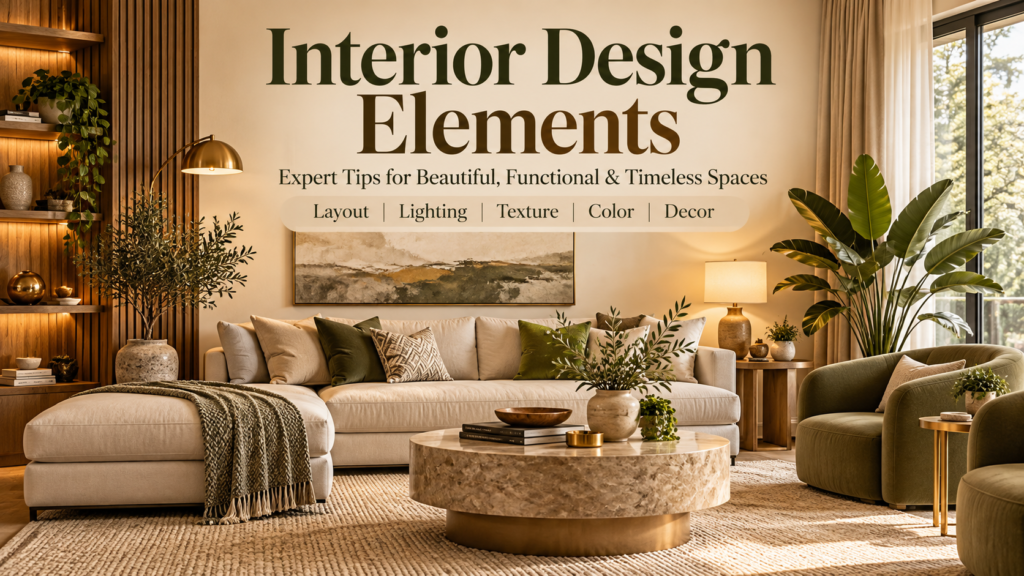
The space works because colour, texture, furniture, lighting, and décor support one another.
When planning a room, start with the largest elements first, such as flooring, walls, and furniture. Then gradually introduce lighting, textiles, artwork, accessories, and smaller decorative details.
Why Interior Design Elements Matter
Understanding these elements can make the design process more organised. Instead of choosing items individually, you can think about how each decision affects the overall room.
For example, before selecting a statement light fixture, consider whether its size works with the ceiling height. Before choosing a dark wall colour, consider the amount of natural light available.
This approach helps create interiors that are not only attractive but also practical for everyday use.
Common Mistakes to Avoid
When using interior design elements, avoid these common mistakes:
- Using too many colours without a clear palette
- Choosing furniture without measuring the room
- Ignoring natural and artificial lighting
- Using too many decorative objects
- Mixing unrelated design styles
- Forgetting storage requirements
- Creating insufficient walking space
- Following trends without considering personal needs
A thoughtful design does not require every trend or decorative feature. It requires a clear understanding of what the space needs.
Final Thoughts
The key interior design elements—space, line, form, colour, texture, pattern, lighting, furniture, balance, and proportion—work together to shape the appearance and functionality of a home.
Understanding these basics can help you make better decisions whether you are planning a living room, bedroom, kitchen, dining area, or complete home interior.
The best interior is not simply the one that looks beautiful. It is a space where functionality, comfort, personal style, and visual harmony come together naturally. By carefully combining the right interior design elements, you can create a home that feels welcoming, organised, and truly your own.
How to Use Interior Design Elements in Different Rooms
The right combination of interior design elements can vary depending on the purpose and size of each room. A living room may need comfortable seating and layered lighting, while a bedroom may require a calmer colour palette and softer textures.
Interior Design Elements for the Living Room
The living room is often a social and relaxing space, so comfort and visual balance are important. Start with appropriately sized seating and create a clear arrangement that allows easy movement.
You can introduce texture through rugs, cushions, curtains, and upholstery. Artwork, plants, and decorative accessories can then add personality without overcrowding the room.
Lighting should also be layered to support different activities, from relaxing with family to entertaining guests.
Interior Design Elements for the Bedroom
A bedroom should feel comfortable and peaceful. Soft colours, warm lighting, comfortable fabrics, and practical furniture can help create a relaxing environment.
The bed usually becomes the main focal point. Bedside tables, wardrobes, curtains, rugs, and artwork can then be selected to complement it.
Avoid using too many contrasting patterns or colours if you want a calm and cohesive appearance.
Interior Design Elements for the Kitchen
Kitchen design needs a strong focus on functionality. The layout should provide convenient access to important areas while offering sufficient storage and working space.
Cabinet finishes, countertops, handles, backsplash materials, lighting, and appliances all contribute to the overall design.
In a modern kitchen, clean lines and integrated storage can create an organised appearance while keeping everyday functionality in mind.
Interior Design Elements for the Dining Area
The dining area should provide enough space for comfortable seating and movement. The dining table can act as the central visual element.
Pendant lighting above the table can provide both functional illumination and a decorative feature. Wall art, mirrors, plants, or a simple console can add additional character.
Interior Design Elements for Small Spaces
Small rooms require careful attention to scale, storage, and visual balance. Choosing oversized furniture or too many decorative pieces can make the room feel crowded.
Consider:
- Multifunctional furniture
- Wall-mounted storage
- Light and balanced colours
- Mirrors used thoughtfully
- Vertical storage
- Furniture with suitable proportions
- Minimal decorative accessories
The aim is not to remove everything from the room. Instead, select pieces that provide both function and visual value.
Interior Design Elements for a Modern Home
Modern interiors often focus on simplicity, clean lines, practical layouts, and a controlled colour palette. However, a modern space does not have to feel cold or empty.
Wooden finishes, soft textiles, indoor plants, artwork, and warm lighting can add character to a contemporary room.
When combining interior design elements in a modern home, maintain consistency between materials, furniture, lighting, and colours.
Interior Design Elements for a Luxury Look
A luxurious interior can be created through careful detailing and visual consistency rather than simply using expensive products.
Consider incorporating:
- Elegant lighting fixtures
- Rich textures
- Statement furniture
- Coordinated metallic accents
- Decorative wall treatments
- Quality-looking materials
- Custom storage
- Carefully selected artwork
The key is moderation. Too many statement features competing for attention can reduce the overall sense of sophistication.
How Colour and Lighting Work Together
Colour and lighting are closely connected. The same wall colour can appear different under natural daylight, warm artificial lighting, or cooler artificial lighting.
Before finalising your colour palette, consider how much natural light the room receives throughout the day.
Warm lighting can create a cosy atmosphere, while brighter lighting can make functional areas easier to use. Combining different lighting sources can provide greater flexibility.
This is why lighting should be considered alongside colour rather than treated as a completely separate decision.
How Texture Adds Depth to an Interior
A room can have a beautiful colour palette but still feel flat if all its surfaces have the same appearance.
Texture adds depth by creating differences between surfaces. For example, smooth furniture can be combined with a textured rug, soft curtains, wooden details, and decorative cushions.
The goal is to create enough variation to make the room interesting while maintaining a sense of harmony.
Creating a Cohesive Interior
A cohesive interior does not mean every room needs to look exactly the same. Instead, there should be subtle connections between different spaces.
You can create continuity through:
- Similar flooring
- Related colour palettes
- Repeated materials
- Consistent hardware
- Complementary lighting
- Similar design details
For example, if your living room uses warm wood and neutral colours, small references to those materials can be carried into the dining area or hallway.
A Simple Interior Design Checklist
Before finalising your interior, review these points:
- Is the furniture correctly scaled?
- Is there enough walking space?
- Does the colour palette feel balanced?
- Is there sufficient storage?
- Does the lighting suit the room’s purpose?
- Are textures being used effectively?
- Are patterns balanced?
- Does the décor reflect your personality?
- Are the materials practical for everyday use?
- Do all the major elements work together?
Using this checklist can help you identify potential problems before making final design decisions.
How to Create Balance Between Different Interior Design Elements
Balance is important when combining multiple interior design elements in one room. If one feature is too dominant, the space may feel visually heavy.
For example, a large statement sofa can be balanced with a simple coffee table, artwork, and appropriately sized lighting. Similarly, a bold accent wall can be complemented with neutral furniture and subtle décor.
Try to create a visual relationship between:
- Furniture and room size
- Wall colours and flooring
- Lighting and furniture
- Patterns and textures
- Décor and available space
Balance does not mean that everything needs to match. Instead, the elements should complement one another.
The Role of Proportion and Scale
Proportion and scale are important when selecting furniture and décor. Every item should be appropriate for the size of the room.
A large pendant light may work well in a spacious living room but could overwhelm a compact space. Similarly, a small rug may look disconnected from a large seating arrangement.
Before purchasing furniture or decorative pieces, measure the available space and consider how the item will relate to the other objects around it.
Using the right proportions can make interior design elements appear more cohesive and comfortable.
Creating a Focal Point in a Room
A focal point gives the eye a natural place to rest. It can be an architectural feature, a piece of furniture, artwork, a TV wall, or an interesting lighting fixture.
Some common focal points include:
- Feature walls
- Fireplaces
- Statement artwork
- TV units
- Large windows
- Designer lighting
- Accent furniture
Once you have selected a focal point, avoid making every other element equally dominant. Supporting details should enhance the main feature rather than compete with it.
Choosing Materials for Your Interior
Materials influence both the appearance and practicality of an interior. Wood, stone, glass, metal, fabrics, and laminates can each create a different visual effect.
When selecting materials, consider:
- Durability
- Maintenance
- Appearance
- Texture
- Budget
- Where the material will be used
For high-use areas, practical and easy-to-maintain materials may be more suitable. Decorative materials can then be used selectively in areas where they have greater visual impact.
The Importance of Functionality
A beautiful interior should also work well for everyday life. This is why functionality should remain an important part of your design decisions.
Think about how the room will actually be used. A family living room may need generous seating and storage, while a home office may require a suitable desk, task lighting, and cable management.
Good interior design elements should support your daily activities rather than simply create an attractive photograph.
Personal Style in Interior Design
Your home should reflect your preferences and lifestyle. While design trends can provide inspiration, they should not determine every decision.
You can personalise your interior through:
- Favourite colours
- Artwork
- Family photographs
- Travel memories
- Books
- Plants
- Decorative objects
- Custom furniture
Personal details can make an interior feel more authentic and connected to the people who live there.
How to Use Trends Without Losing Timelessness
Interior trends can be useful for discovering new colours, materials, furniture styles, and layouts. However, trends can change over time.
A practical approach is to use timeless elements for major investments such as flooring, cabinetry, and large furniture. Trends can then be introduced through smaller and easier-to-change items such as cushions, artwork, accessories, or accent pieces.
This allows you to refresh the appearance of your home without completely redesigning it.
Sustainable Choices in Interior Design
Thoughtful material and product choices can also contribute to a more responsible interior.
Some practical approaches include:
- Choosing durable materials
- Reusing suitable furniture
- Selecting long-lasting designs
- Using natural light effectively
- Avoiding unnecessary purchases
- Choosing efficient lighting where appropriate
Sustainability does not mean compromising on aesthetics. A carefully planned interior can combine functionality, comfort, style, and responsible choices.
How to Make Your Interior Design More Cohesive
A cohesive interior has a sense of connection between its different elements. You can achieve this by repeating certain colours, materials, shapes, or finishes throughout the room.
For example, wooden details can appear in the furniture, shelves, and décor. Similarly, one accent colour can be repeated through cushions, artwork, and accessories.
This creates continuity without making the room look repetitive.
Interior Design Elements for Different Home Styles
Different interior styles use the basic design elements in different ways.
Minimalist Interior
Minimalist interiors usually focus on simplicity, functional furniture, clean lines, and limited decoration.
Contemporary Interior
Contemporary interiors can combine modern furniture, balanced colours, interesting textures, and current design features.
Traditional Interior
Traditional interiors may include detailed furniture, classic patterns, warm colours, and decorative accessories.
Scandinavian Interior
Scandinavian-inspired interiors often emphasise simplicity, natural materials, functional furniture, and lighter tones.
Luxury Interior
Luxury interiors generally focus on sophisticated materials, elegant lighting, refined textures, statement pieces, and careful detailing.
Regardless of the style you choose, the basic interior design elements remain important for creating balance and functionality.
Quick Tips for Better Interior Design
Before completing your room, keep these practical tips in mind:
- Measure before buying furniture.
- Select a clear colour palette.
- Leave sufficient walking space.
- Combine different textures.
- Use lighting in layers.
- Avoid excessive decoration.
- Include practical storage.
- Consider maintenance requirements.
- Add personal elements.
- Keep the overall design cohesive.
These simple steps can help you create an interior that looks considered rather than overcrowded.
Final Thoughts
Understanding interior design elements gives you a strong foundation for creating a home that is both attractive and practical. Space, colour, lighting, texture, furniture, pattern, form, balance, and proportion all contribute to the final appearance of a room.
Rather than choosing each item separately, consider how the elements interact with one another. A carefully planned combination can make a space feel more comfortable, organised, and visually complete.
Whether you prefer a modern, minimalist, traditional, contemporary, or luxury interior, these fundamental principles can help you create a design that suits your space and reflects your personal style.
this content made by chatgpt.com