
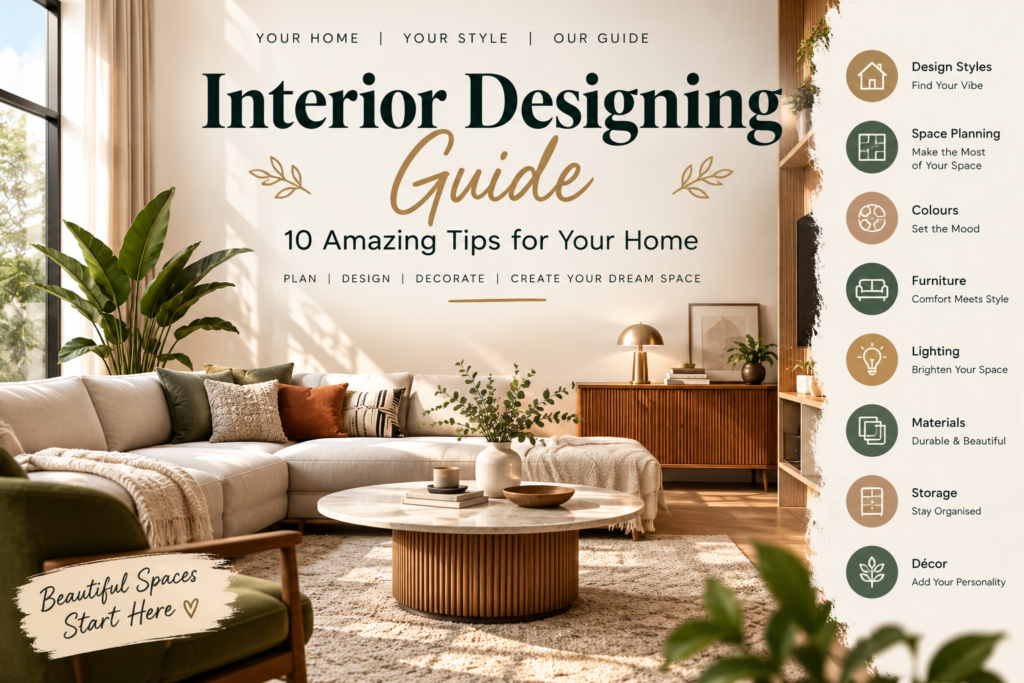
Interior Designing Guide: 10 Amazing Tips for Your Home
Creating a beautiful home is not only about choosing attractive furniture or following the latest décor trends. Good interior design combines style, comfort, functionality, space planning, lighting, colours, materials, and personal preferences to create a space that works for everyday life.
If you are planning a new home, renovating an existing space, or simply looking for ideas to refresh your interiors, this interior designing guide can help you understand the essential steps involved. From choosing a design style to selecting furniture and planning lighting, each decision contributes to the overall look and functionality of your home.
Whether you prefer a modern, minimalist, luxurious, traditional, contemporary, or eclectic interior, the goal should be to create a space that feels comfortable, practical, and personal. This interior designing guide will take you through the key elements you should consider before designing your home.
What Is Interior Designing?
Interior designing is the process of planning and creating functional and visually appealing indoor spaces. It involves much more than decoration. A well-planned interior considers the layout of a room, furniture placement, colours, lighting, materials, storage, textures, and the way people use the space.
A successful interior design should balance aesthetics and functionality. A room may look beautiful, but if there is not enough storage or comfortable movement space, it may not work well in everyday life.
This is why having a clear interior designing guide can make the planning process easier and more organised. It helps homeowners understand the different elements of interior design and make decisions based on their needs, lifestyle, available space, and budget.
Why Is Interior Design Important?
Your surroundings can influence how comfortable and efficiently you use your home. Thoughtful interior planning can help make rooms feel organised, functional, and visually cohesive.
A good interior designing guide can help you understand how to:
- Make better use of available space
- Improve storage and organisation
- Create a comfortable atmosphere
- Choose furniture according to room proportions
- Use lighting effectively
- Build a consistent colour palette
- Reflect your personality
- Plan your budget more effectively
Instead of making design decisions randomly, planning each element together can create a more balanced result. Following an interior designing guide can also help you avoid common mistakes and create a home that is both attractive and practical.
Step 1: Understand Your Lifestyle and Requirements
The first step in this interior designing guide is understanding how you use your home.
Before choosing colours, furniture, or décor, think about your daily routine. A family with children may have different requirements from someone living alone. Similarly, someone working from home may need a dedicated workspace, while people who frequently entertain guests may need more seating.
Consider questions such as:
- How many people will use the space?
- What are the main activities performed in each room?
- How much storage is required?
- Do you need a home office or study area?
- Do you frequently have guests?
- How much maintenance are you comfortable with?
- Which areas of the home need the most attention?
These answers provide a practical foundation for the rest of your design decisions. A useful interior designing guide should always begin with your actual lifestyle rather than simply focusing on trends.
Step 2: Choose an Interior Design Style
One of the most enjoyable parts of interior design is selecting a style that reflects your personality. This interior designing guide recommends choosing a style based on your preferences, lifestyle, space, and budget.
Popular options include:
Modern Interior Design
Modern design generally focuses on clean lines, practical furniture, simple forms, and balanced colours. It can create a neat and contemporary appearance.
Minimalist Interior Design
Minimalism focuses on purposeful design and avoiding unnecessary clutter. Simple furniture, neutral colours, open space, and efficient storage are commonly used.
Contemporary Interior Design
Contemporary interiors can combine current design elements, different textures, materials, colours, and furniture forms.
Traditional Interior Design
Traditional design often incorporates classic furniture, warm colours, decorative details, patterns, and timeless elements.
Luxury Interior Design
Luxury interiors can feature sophisticated lighting, refined finishes, statement furniture, premium materials, and carefully planned details.
Scandinavian Interior Design
Scandinavian design often focuses on simplicity, natural materials, comfortable furniture, light colours, and functional spaces.
You do not have to follow one style exactly. Combining elements from different styles can help create a more personalised home. This interior designing guide encourages you to take inspiration from different styles while adapting them to your own space.
Step 3: Plan Your Space and Layout
Space planning is one of the most important parts of any interior designing guide.
Before buying furniture, measure your rooms and understand the available floor area. Consider doors, windows, walkways, electrical points, and existing architectural features.
Furniture should be appropriately proportioned for the room. Oversized furniture can make a small room feel crowded, while furniture that is too small may make a large room feel incomplete.
When planning a layout, make sure there is enough space for comfortable movement. Consider how people will enter the room, sit, work, relax, and access storage.
For smaller homes, multifunctional furniture, vertical storage, and carefully planned layouts can help maximise available space.
A good interior designing guide should always consider both appearance and movement. A beautiful room will not be practical if the furniture arrangement makes everyday activities difficult.
Step 4: Create a Colour Palette
Colour can dramatically influence the atmosphere of a room. Choosing the right colours is an important part of this interior designing guide.
A simple approach is to create a colour palette using:
- Primary colour: The main colour used throughout the space
- Secondary colour: Used for furniture, textiles, or larger décor elements
- Accent colour: Used in smaller decorative features
Neutral shades such as beige, cream, white, grey, and earthy tones can create a versatile foundation. Accent colours can then add personality and contrast.
When choosing colours, consider natural light. A colour can appear different depending on the amount of daylight and the type of artificial lighting in the room.
Testing paint samples in the actual room before making a final decision can help you understand how the colour looks throughout the day.
Step 5: Select Furniture Carefully
Furniture should be selected according to the room’s size, purpose, style, and comfort requirements.
Before purchasing a piece, consider:
- Dimensions
- Comfort
- Material
- Durability
- Maintenance
- Storage capacity
- Colour
- Overall style
This interior designing guide recommends measuring your available space before purchasing furniture. Avoid buying furniture simply because it looks attractive in a showroom or photograph. Think about how it will function in your actual home.
For smaller spaces, multifunctional furniture can provide additional flexibility. For larger rooms, furniture can help define separate zones for sitting, working, dining, or relaxing.
The right furniture should support your lifestyle while also complementing your overall interior design style.
Step 6: Plan Your Lighting
Lighting is an essential part of an effective interior design plan. It can highlight architectural details, influence the appearance of colours, and create different moods.
A useful interior designing guide should consider three main types of lighting:
Ambient Lighting
This provides general illumination throughout a room.
Task Lighting
Task lighting is designed for specific activities such as reading, studying, cooking, or working.
Accent Lighting
Accent lighting can highlight artwork, furniture, architectural features, shelves, or decorative elements.
Natural light should also be considered. Window treatments and furniture placement should allow you to make practical use of available daylight.
A well-planned lighting design can make your interior feel more comfortable while also improving functionality.
Step 7: Focus on Storage and Functionality
A beautiful home can quickly feel disorganised if there is not enough storage.
During the planning stage, identify where everyday items will be stored. Consider wardrobes, cabinets, shelves, drawers, modular storage, and multifunctional furniture.
Storage should be easy to access and appropriate for the items being stored.
For example, kitchen storage should support cooking and food preparation, while bedroom storage should accommodate clothing and personal belongings.
A strong interior designing guide should always consider functionality alongside appearance. Good storage can help keep your home organised and make better use of available space.
Step 8: Choose Materials and Finishes
Materials influence the appearance, durability, maintenance, and character of an interior.
Common materials include:
- Natural and engineered wood
- Stone
- Glass
- Metal
- Tiles
- Fabrics
- Laminates
- Paint and wall finishes
When selecting materials, consider where they will be used and how much wear they are likely to experience.
High-use areas may require materials that are easy to maintain and suitable for frequent use. Decorative areas may offer more flexibility for experimenting with textures and finishes.
This interior designing guide recommends looking beyond appearance when selecting materials. Consider practicality, maintenance requirements, durability, and compatibility with the rest of the design.
Step 9: Add Textures and Décor
Once the main elements are planned, decorative details can add character to your home.
Textures can be introduced through:
- Rugs
- Curtains
- Cushions
- Upholstery
- Wall art
- Plants
- Decorative objects
- Throws
- Wooden or woven elements
The key is balance. Adding too many decorative elements can make a room feel crowded, while too few may make it feel unfinished.
Choose décor that complements the main colour palette and reflects your personality. This interior designing guide encourages you to use décor to personalise your space rather than simply copying a showroom or online image.
Step 10: Think About Your Budget
Budget planning is another essential part of this interior designing guide.
Before starting the project, divide your budget into categories such as:
- Furniture
- Flooring
- Lighting
- Paint and wall finishes
- Storage
- Kitchen and bathroom elements
- Décor
- Professional design services
Prioritise essential features first and then allocate the remaining budget to decorative or optional elements.
It is also sensible to leave some flexibility for unexpected expenses during renovation or installation.
A well-planned budget allows you to focus on important elements while avoiding unnecessary spending.
Sustainable Interior Design
Sustainability can also be considered when planning an interior. Instead of replacing everything, consider whether existing furniture can be reused, repaired, refinished, or incorporated into the new design.
Choosing durable products and avoiding unnecessary purchases can help create an interior that remains useful for longer.
You can also consider natural materials, locally available products, energy-efficient lighting, and furniture designed for long-term use where appropriate.
This interior designing guide shows that sustainable choices can support both aesthetics and practicality. Sustainability does not require sacrificing style.
How to Create a Timeless Interior
Trends can be useful for inspiration, but they can change quickly. If you want your home to remain appealing over time, create a strong foundation using practical layouts, comfortable furniture, balanced colours, and durable materials.
You can incorporate current trends through easily replaceable elements such as:
- Cushions
- Rugs
- Artwork
- Decorative accessories
- Small lighting pieces
This allows you to update the appearance of your home without redesigning the entire space.
A good interior designing guide should focus not only on current trends but also on creating interiors that remain functional and appealing over time.
Should You Hire an Interior Designer?
Some projects can be planned independently, while larger renovations may involve many interconnected decisions.
A professional interior designer can help with areas such as:
- Space planning
- Furniture layouts
- Colour selection
- Material selection
- Lighting
- Storage planning
- Design coordination
- 3D visualisation
Before hiring a professional, review their portfolio, understand their services, discuss your budget, and communicate your requirements clearly.
Professional guidance can be particularly useful when a project involves multiple rooms, structural changes, detailed customisation, or extensive renovation work.
This interior designing guide can help you understand your requirements before discussing your project with a professional designer.
Common Interior Design Mistakes to Avoid
Even a well-chosen design style can become ineffective if the space is poorly planned.
Avoid these common mistakes:
- Buying furniture without measuring the room
- Choosing style over functionality
- Using too many colours
- Ignoring lighting
- Overcrowding the room
- Forgetting storage requirements
- Copying an online design without adapting it
- Following every trend
- Ignoring maintenance requirements
- Spending the entire budget on one feature
A successful interior should look attractive while also being comfortable and practical.
Following an interior designing guide can help you identify these potential problems before they affect the final design.
Interior Design Checklist
Before finalising your project, use this simple checklist from this interior designing guide:
Lifestyle: Does the design suit your daily routine?
Style: Does it reflect your personal taste?
Layout: Is there enough space for comfortable movement?
Colour: Does the colour palette work with the lighting?
Furniture: Is everything appropriately sized?
Lighting: Do you have ambient, task, and accent lighting where needed?
Storage: Is there enough space for everyday belongings?
Materials: Are the materials suitable and practical?
Budget: Are your choices within your planned budget?
Personalisation: Does the space feel like your own?
Frequently Asked Questions
What is an interior designing guide?
An interior designing guide is a practical resource that explains the key steps involved in planning and designing an interior, including style, layout, colours, furniture, lighting, materials, storage, and décor.
Why should I follow an interior designing guide?
An interior designing guide can help you organise your ideas, plan your budget, avoid common mistakes, and create a home that balances style and functionality.
What is the first step in interior designing?
The first step is understanding your lifestyle, requirements, space, and budget. Once these are clear, you can begin exploring styles, layouts, colours, furniture, and materials.
What are the main elements of interior design?
Important elements include space, layout, colour, lighting, furniture, materials, textures, patterns, and décor. These elements should work together to create a functional and visually balanced space.
How do I choose the right interior design style?
Start by identifying the colours, furniture, textures, and atmosphere you naturally prefer. Then consider whether the style suits your home’s size, layout, lifestyle, and budget.
Can different interior design styles be combined?
Yes. Combining complementary elements from different styles can create a personalised interior. Repeating colours, materials, or textures can help maintain visual consistency.
Is interior design only about decoration?
No. Interior design involves much more than decoration. It includes space planning, functionality, furniture placement, lighting, materials, storage, colours, and the overall experience of the space.
How can I make my home look more luxurious?
Focus on proportion, lighting, quality finishes, textures, cohesive colours, and carefully selected furniture. A luxurious appearance comes from thoughtful design rather than simply adding expensive items.
Final Thoughts
A well-planned home should be more than visually attractive. It should support your lifestyle, provide comfort, make good use of available space, and reflect your personality.
This interior designing guide provides a practical starting point for planning your space—from understanding your requirements and choosing a design style to planning the layout, selecting colours, furniture, lighting, materials, and décor.
You do not need to follow every trend or copy a showroom exactly. Instead, take inspiration from different ideas and adapt them to your own home.
Whether you are designing a single bedroom, renovating your living room, planning a complete home makeover, or starting a new interior project, this interior designing guide can help you approach the process in a more organised way.
Thoughtful planning can help you create a space that combines beauty, functionality, comfort, and personality. The best interior is ultimately one that works for the people who live in it.
this content made by chatgpt.com