
Choosing the right interior design for your home can feel overwhelming. With so many styles, colours, materials, furniture options, and décor ideas available, it can be difficult to decide what will actually work for your space. If you are wondering how to choose interior design that looks beautiful while also being practical, the process starts with understanding your lifestyle, preferences, space, and budget.
Learning how to choose interior design is not simply about selecting a style that looks attractive in photographs. Your interior should suit the way you live, provide the functionality you need, and create a comfortable environment for everyday life.
In this guide, we will explore how to choose interior design for different spaces, how to select colours and materials, how to plan lighting and storage, and what mistakes to avoid.
How to Choose Interior Design Based on Your Lifestyle
The first step in understanding how to choose interior design is to think about your lifestyle and everyday requirements.
Before selecting furniture, colours, or décor, consider how you actually use your home. A beautiful interior should also be comfortable and convenient.
For example, a family with children may need durable and easy-to-clean materials. Someone who works from home may require a dedicated workspace, while people who frequently entertain guests may prefer an open living area with comfortable seating.
Ask yourself:
- How many people will use the space?
- Do you need a dedicated work or study area?
- How much storage do you need?
- Do you frequently host guests?
- Do you need child-friendly or pet-friendly materials?
- Which rooms are most important to you?
- How much maintenance are you comfortable with?
Answering these questions gives you a strong starting point for how to choose interior design that fits your lifestyle rather than simply following a trend.
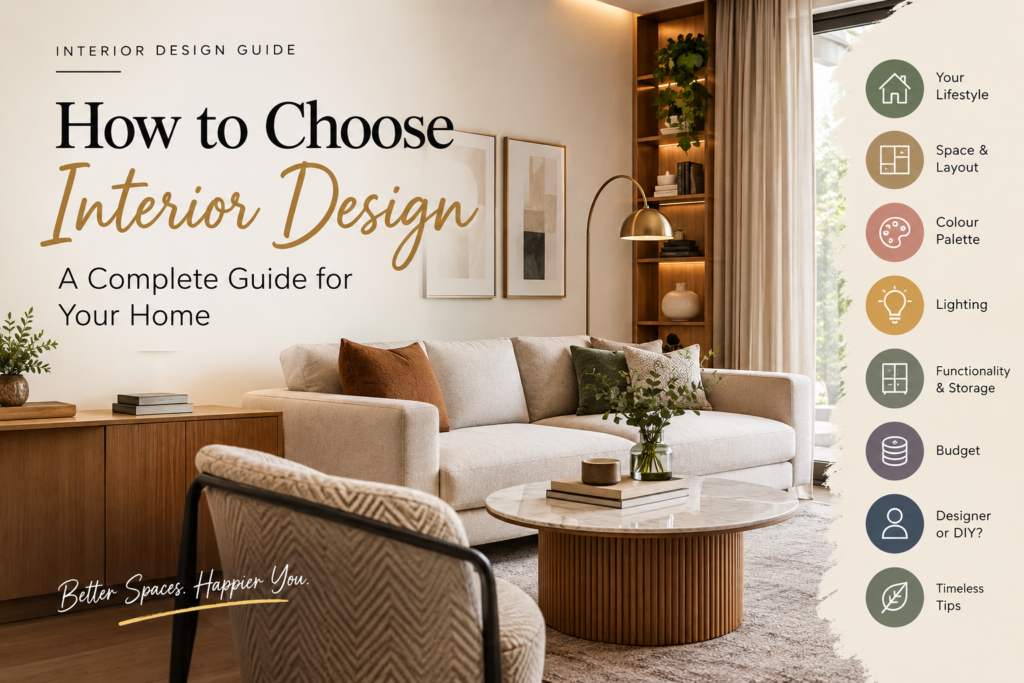
Explore Different Interior Design Styles
Another important part of learning how to choose interior design is understanding the different styles available.
You do not have to follow a particular style just because it is currently popular. Instead, explore different options and identify the visual elements that appeal to you.
Modern Interior Design
Modern interiors generally focus on clean lines, simple layouts, functional furniture, and balanced colours. This style can work well for people who prefer a neat and uncluttered environment.
Contemporary Interior Design
Contemporary interiors can combine current design elements, different materials, textures, colours, and furniture forms. The style can be adapted as preferences change.
Minimalist Interior Design
Minimalist design focuses on simplicity and purposeful choices. Furniture and décor are carefully selected to create an organised and uncluttered environment.
Traditional Interior Design
Traditional interiors often feature classic furniture, warm colours, decorative details, and timeless elements. This approach can create a welcoming and familiar atmosphere.
Luxury Interior Design
Luxury interiors may incorporate premium materials, elegant furniture, sophisticated lighting, statement pieces, and carefully selected finishes. Luxury does not necessarily mean adding more items; thoughtful planning and quality are important parts of the overall design.
When considering how to choose interior design styles, create a mood board with your favourite interiors, colours, furniture, materials, and décor. This can help you identify patterns in your preferences.
How to Choose Interior Design According to Your Space and Layout
The size and layout of your home are important when deciding how to choose interior design.
A design that works beautifully in a large villa may not be suitable for a compact apartment. Before purchasing furniture or décor, measure the room and understand its existing layout.
For smaller spaces, consider:
- Multi-functional furniture
- Vertical storage
- Appropriate furniture proportions
- Light and balanced colour schemes
- Mirrors and reflective surfaces
- Open and uncluttered layouts
For larger rooms, you can experiment with statement furniture, larger artwork, layered lighting, and clearly defined functional areas.
The goal is to choose an interior design that works with your space rather than forcing a particular style into it.
How to Choose Interior Design Colours
Colour is one of the most noticeable parts of an interior. Therefore, knowing how to choose interior design colours can make a significant difference to the overall appearance of your home.
Start by selecting a base colour and then add complementary shades through furniture, textiles, artwork, and accessories.
A simple colour palette can include:
- Dominant colour: Used on larger surfaces such as walls
- Secondary colour: Used for furniture and textiles
- Accent colour: Used for décor and smaller accessories
Neutral shades such as beige, white, cream, grey, and earthy tones can provide a versatile foundation. Deeper or brighter colours can then be introduced through accent pieces.
Natural light should also be considered. A room with limited daylight may require a different colour approach from a bright, naturally lit room.
Before finalising a colour, test a small sample in the actual room because colours can appear different depending on natural light, artificial lighting, furniture, and surrounding finishes.
Think About Lighting
Lighting is another important consideration when deciding how to choose interior design for your home.
Good lighting can influence how colours, textures, furniture, and architectural features appear.
A balanced lighting plan can include:
- Ambient lighting for general illumination
- Task lighting for activities such as reading or working
- Accent lighting to highlight artwork, furniture, or architectural details
Natural light should also be used wherever possible. Furniture placement, curtains, blinds, and window treatments should be planned without unnecessarily blocking available daylight.
When deciding how to choose interior design, think about lighting from the beginning rather than treating it as an afterthought.
Prioritise Functionality and Storage
A stylish home should also be easy to use. If you are learning how to choose interior design, functionality should be considered alongside aesthetics.
Think about where everyday items will be stored and how easily you can move around each room.
Built-in wardrobes, modular storage, multifunctional furniture, floating shelves, and well-planned cabinets can help keep your home organised.
Do not choose furniture only because it looks attractive. Consider its:
- Size
- Comfort
- Durability
- Maintenance
- Storage capacity
- Suitability for your lifestyle
The right interior design should make your daily routine easier rather than create additional inconvenience.
Set a Realistic Interior Design Budget
Budget is an essential part of understanding how to choose interior design. Your available budget will influence your choices of furniture, materials, finishes, lighting, storage, and décor.
Before beginning your project, divide your budget into categories such as:
- Furniture
- Flooring
- Lighting
- Paint and wall finishes
- Storage
- Soft furnishings
- Décor
- Design or professional services
It is also useful to keep some flexibility for unexpected expenses.
Having a clear budget allows you to prioritise important features and avoid making rushed purchasing decisions.
Decide Whether You Need an Interior Designer
Another question that often comes up when learning how to choose interior design is whether professional assistance is necessary.
Some homeowners prefer to plan their interiors themselves, while others work with a professional interior designer.
An interior designer can assist with space planning, material selection, colour schemes, furniture layouts, lighting, and project coordination.
Before choosing a designer, review their portfolio, understand their design approach, discuss your requirements, and make sure their services match your expectations and budget.
How to Choose Interior Design for Different Rooms
Every room has a different purpose, so how to choose interior design can vary from one room to another.
Instead of using exactly the same approach throughout your home, consider the specific function and atmosphere required in each space.
Living Room Interior Design
The living room is often one of the most frequently used areas of a home. It should feel welcoming while providing enough seating and movement space.
Consider a comfortable sofa, suitable coffee table, layered lighting, wall décor, and practical storage. Artwork, textured furniture, or a statement wall can add personality without making the room feel overcrowded.
Bedroom Interior Design
When considering how to choose interior design for a bedroom, focus on comfort and relaxation.
Soft colours, appropriate lighting, comfortable furniture, curtains, and practical storage can help create a peaceful atmosphere.
Make sure furniture is appropriately sized for the room and that there is enough space to move comfortably around the bed.
Kitchen Interior Design
Kitchen design should focus strongly on functionality. Cabinet placement, appliances, work surfaces, and storage should be planned around everyday cooking and cleaning.
When deciding how to choose interior design for a kitchen, consider materials that are practical, durable, and relatively easy to maintain.
Bathroom Interior Design
Bathrooms require careful consideration of moisture, ventilation, storage, lighting, and maintenance.
Choose materials appropriate for humid environments and plan storage around the products you regularly use.
Good mirror lighting and functional storage can improve both convenience and appearance.
Create an Interior Design Mood Board
A mood board is a useful tool for anyone learning how to choose interior design.
You can create a digital or physical mood board using photographs, colour swatches, furniture references, fabric samples, materials, and décor ideas.
Collect images that represent the atmosphere you want. Look for similarities in:
- Colours
- Textures
- Furniture shapes
- Materials
- Lighting
- Architectural details
Organising these elements together can help you determine whether your ideas work well as a complete design.
How to Choose Interior Design Materials
Materials influence the appearance, durability, maintenance, and overall character of an interior.
When deciding how to choose interior design materials, consider where each material will be used and how frequently the space will be used.
For high-traffic areas, durability should be an important consideration. Decorative areas may provide more flexibility for experimenting with textures and finishes.
Compare materials based on:
- Durability
- Maintenance
- Cost
- Appearance
- Availability
- Safety
- Suitability for the room
Do not select a material simply because it looks attractive in a photograph. Consider how it will perform in your actual home.
Balance Aesthetics and Functionality
One of the most important principles when learning how to choose interior design is finding the right balance between appearance and usability.
A room can look beautiful but still be uncomfortable if furniture is poorly positioned or there is insufficient storage.
Before finalising your design, ask:
- Can I move around comfortably?
- Is there enough storage?
- Are frequently used items easy to access?
- Does the lighting support the activities performed in the room?
- Is the furniture correctly proportioned?
Good interior design should look appealing while also supporting everyday life.
Personalise Your Interior Design
Your home should reflect your personality rather than looking like an exact copy of a showroom or social media post.
Personal touches can include artwork, photographs, books, plants, handcrafted objects, travel souvenirs, or meaningful decorative pieces.
You can also combine different design influences. For example, modern furniture can be paired with traditional artwork or handcrafted décor.
Personalisation is an important part of knowing how to choose interior design because the final space should feel like your home.
Consider Sustainable Interior Design Choices
Sustainability can also be considered when deciding how to choose interior design materials and furniture.
Choosing durable products, repairing or reusing furniture, selecting long-lasting materials, and avoiding unnecessary purchases can help reduce waste.
Where practical, consider locally available materials and products that suit the space and require manageable maintenance.
Rather than replacing everything at once, focus on purchasing pieces that serve a clear purpose and are likely to remain useful over time.
Sustainable interior design can involve thoughtful choices around materials, durability, resource use, and indoor environmental quality. The U.S. Green Building Council’s LEED resources provide guidance on sustainable residential design and material selection
Avoid Following Interior Trends Blindly
Interior trends can provide inspiration, but they should not determine every decision in your home.
When learning how to choose interior design, remember that trends can change, while major elements such as flooring, cabinetry, and built-in furniture are generally intended to last longer.
A practical approach is to combine timeless elements with a few current trends.
For example, keep the main design relatively timeless and introduce trends through:
- Cushions
- Artwork
- Rugs
- Decorative objects
- Smaller lighting accessories
This makes it easier to refresh your interiors without redesigning the entire space.
How to Make Your Interior Design Timeless
If you want to understand how to choose interior design that remains appealing over time, focus on creating a strong foundation.
Timeless interiors can include:
- Balanced colour schemes
- Durable materials
- Well-proportioned furniture
- Functional layouts
- Classic lighting
- Thoughtful storage
- Limited use of short-lived trends
You can still experiment with trends through accessories that are easier and less expensive to replace.
Questions to Ask Before Starting Your Interior Design Project
Before purchasing furniture or starting renovation work, ask yourself:
- What is my overall budget?
- What is the main purpose of each room?
- Which interior design style do I prefer?
- What colours do I want to use?
- How much storage do I need?
- What furniture can I reuse?
- Which materials are practical for my lifestyle?
- How much natural light does each room receive?
- Which areas require professional assistance?
- Which features are essential and which are optional?
Answering these questions can make the process of deciding how to choose interior design more organised and manageable.
Common Interior Design Mistakes to Avoid
Knowing what not to do is just as important as knowing how to choose interior design.
Avoid these common mistakes:
- Selecting furniture without measuring the room
- Using too many colours or patterns
- Ignoring lighting requirements
- Prioritising appearance over functionality
- Choosing materials without considering maintenance
- Copying a design without adapting it to your lifestyle
- Spending the entire budget on one feature
- Overcrowding rooms with furniture and décor
- Following every trend without considering long-term use
Good interior design is about creating balance between aesthetics, comfort, functionality, and personal expression.
Final Checklist for Choosing Your Interior Design
Before finalising your design, review this checklist:
Style: Does the overall design reflect your taste?
Function: Does every piece of furniture serve a purpose?
Layout: Is there enough space to move comfortably?
Colour: Do the colours complement one another?
Lighting: Is there enough ambient, task, and accent lighting?
Storage: Is everyday storage sufficient?
Materials: Are the selected materials practical and durable?
Budget: Are your choices within your planned budget?
Personalisation: Does the space feel like your home?
Long-term appeal: Will the design continue to work for your lifestyle?
This checklist can help you make more confident decisions when considering how to choose interior design for your home.
Final Thoughts
Understanding how to choose interior design becomes easier when you focus on your lifestyle, space, preferences, budget, and long-term requirements.
Instead of selecting a style simply because it is trending, consider how it will fit into your everyday life. Explore different styles, create a mood board, plan your layout, select a practical colour palette, and pay attention to lighting, storage, furniture, and materials.
If the project is complex, professional interior design guidance can also help bring your ideas together.
Whether you are decorating a single room or planning an entire home, thoughtful planning can help you create an interior that combines style, comfort, functionality, and personality.
Ultimately, knowing how to choose interior design is about creating a space that looks beautiful while genuinely working for the people who live in it.
Frequently Asked Questions
How do I choose the right interior design style?
To understand how to choose interior design style, start by considering your personal taste, lifestyle, home layout, preferred colours, and functional requirements. Exploring different styles and creating a mood board can help you identify what suits your home.
What should I consider before choosing an interior design?
Consider your budget, room size, layout, lifestyle, storage needs, lighting, materials, maintenance requirements, and the overall atmosphere you want to create.
How do I choose interior design for a small home?
When deciding how to choose interior design for a small home, focus on appropriately sized furniture, multifunctional pieces, practical storage, clear pathways, and a visually balanced colour palette. Avoid overcrowding the space.
Should every room have the same interior design style?
Not necessarily. Different rooms can have their own character while maintaining a visual connection through consistent colours, materials, finishes, or design elements.
Is hiring an interior designer necessary?
It depends on the complexity of your project and your personal requirements. Professional guidance can be useful for space planning, renovation, material selection, and coordinating multiple aspects of an interior project.
How can I make a small room look more spacious?
Use appropriately sized furniture, maintain clear pathways, make good use of vertical storage, and avoid overcrowding the room. Light-reflective surfaces and a balanced colour palette can also help create a more open visual effect.
How can I make my interior design look timeless?
Focus on practical layouts, well-proportioned furniture, durable materials, balanced colours, and quality lighting. Use trends mainly through easily replaceable décor and accessories.
What is the first step in planning an interior design?
The first step in understanding how to choose interior design is to identify your requirements. Determine how you use the space, what you need from it, your preferred style, and your budget before making major design or purchasing decisions.
Conclusion
Choosing an interior design is a personal process that combines creativity with practical planning. There is no single style that works for every home or every person.
If you want to know how to choose interior design successfully, start with your lifestyle and requirements. Then consider your space, budget, preferred style, colour palette, lighting, storage, furniture, and materials.
Take time to explore your options and create a clear plan before making major purchases. Most importantly, choose elements that are comfortable, functional, and suitable for everyday life.
With thoughtful planning, you can create an interior that is beautiful, functional, comfortable, and genuinely personal. start your dream interior project
this content made by chatgpt.com