
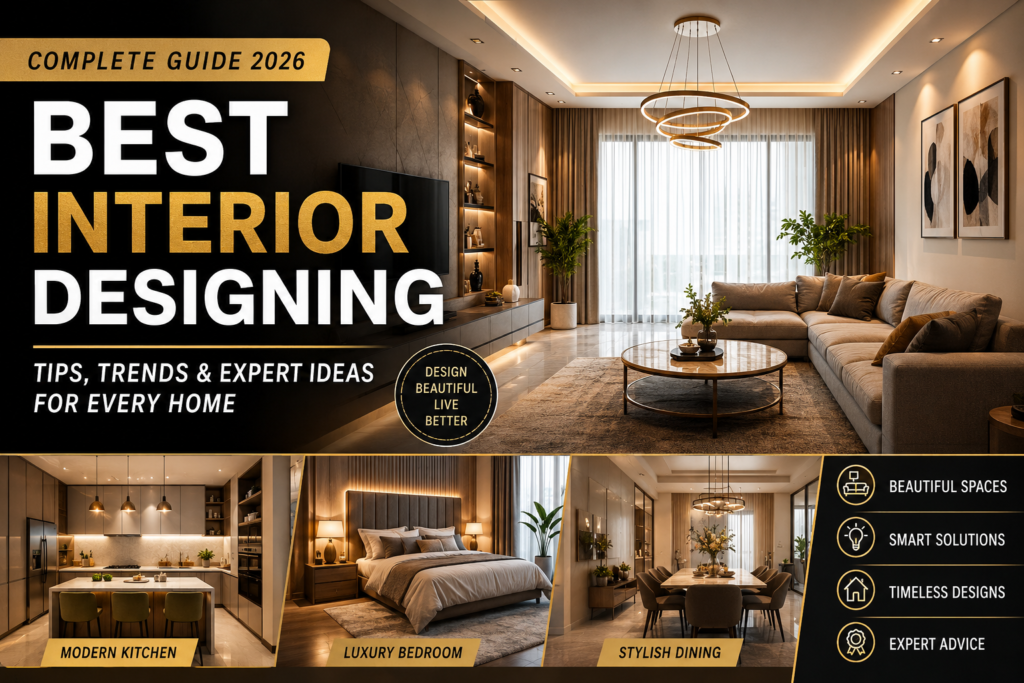
Best Interior Designing: The Complete Guide to Creating Beautiful and Functional Spaces
Your home is more than just four walls—it’s a reflection of your personality, lifestyle, and aspirations. Whether you’re building a new house, renovating an apartment, or refreshing a single room, choosing the best interior designing approach can dramatically improve both aesthetics and functionality.
Great interior design isn’t just about luxury furniture or expensive décor. It’s about creating spaces that feel comfortable, efficient, visually appealing, and uniquely yours. With thoughtful planning, the right colour palette, quality materials, and smart space utilization, every home can become beautiful regardless of its size or budgetIn this comprehensive guide, we’ll explore everything you need to know about the best interior designing practices, current trends, room-by-room ideas, and expert tips to help you make informed decisions.
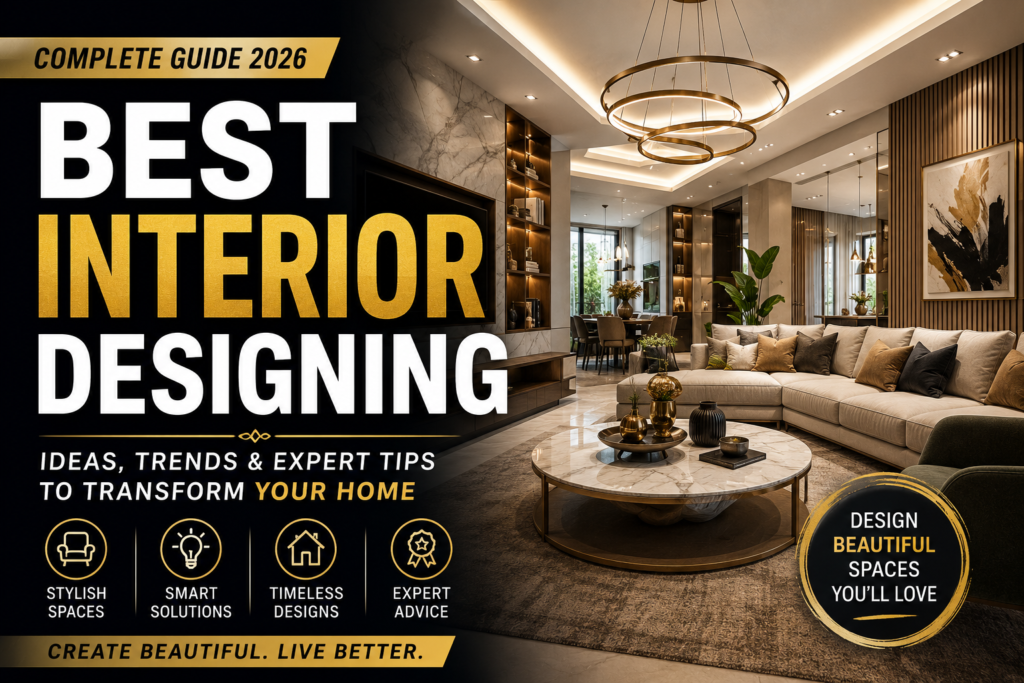
What Is Best Interior Designing?
best Interior designing is the art and science of enhancing interior spaces to improve functionality, comfort, safety, and visual appeal. Professional best interior designers combine creativity with technical knowledge to design spaces that suit both the client’s lifestyle and architectural structure.A successful interior design project considers several factors, including:The best interior designing approach balances beauty with practicality, ensuring that every element serves a purpose while contributing to the overall aesthetic.
Why Choosing the Best Interior Designing Matters
A thoughtfully designed home offers benefits beyond appearance.
Improves Daily Living
A well-planned home makes everyday tasks easier. Efficient layouts reduce clutter, improve movement, and maximise usable space.
Increases Property Value
Professionally designed interiors often increase resale value. Buyers are naturally attracted to homes that feel modern, organised, and move-in ready.
Enhances Comfort
Proper lighting, ergonomic furniture, and smart layouts create a comfortable environment for family members and guests.
Reflects Your Personality
Every colour, texture, and décor element contributes to expressing your unique style and preferences.
Better Space Utilisation
Especially in apartments and compact homes, intelligent design ensures no space goes to waste.
Key Principles of the Best Interior Designing
1. Functionality First
Beautiful spaces should also be practical. Every room should support its intended purpose without compromising comfort.
2. Balance
Visual balance creates harmony. Designers achieve this through symmetrical, asymmetrical, or radial arrangements of furniture and décor.
3. Colour Harmony
Colours influence mood and perception. Neutral palettes create timeless elegance, while bold accents add personality and energy.
4. Proper Lighting
Lighting transforms interiors. A combination of natural light, ambient lighting, task lighting, and accent lighting creates depth and warmth.
5. Texture and Materials
Mixing wood, stone, glass, metal, and fabric adds visual richness and sophistication.
6. Smart Storage
Hidden storage solutions help maintain clean, organised interiors without sacrificing style.
Latest best Interior Designing Trends
Modern homes continue to evolve with changing lifestyles. Some of today’s most popular trends include:
Minimalist Design
Simple layouts, clean lines, and clutter-free spaces remain timeless.
Natural Materials
Wood, marble, linen, bamboo, and natural stone create warm and inviting interiors.
Earthy Colour Palettes
Soft beige, olive green, warm grey, sand, and terracotta dominate contemporary homes.
Sustainable Design
Eco-friendly materials, energy-efficient lighting, and sustainable furniture are becoming increasingly popular.
Smart Homes
Technology now integrates seamlessly into interiors through automated lighting, climate control, and smart security systems.
Statement Lighting
Pendant lights, designer chandeliers, and architectural lighting have become focal points in modern interiors.
Room-by-Room best Interior Designing Tips
Living Room
The living room is often the heart of the home.
Best practices include:
- Choose comfortable seating.
- Add layered lighting.
- Use a neutral base with colourful accessories.
- Incorporate indoor plants.
- Create a balanced furniture layout.
A thoughtfully designed living room becomes an inviting space for relaxation and entertaining guests.
Bedroom
A bedroom should promote rest and relaxation.
Key design ideas include:
- Soft lighting
- Comfortable bedding
- Minimal clutter
- Built-in wardrobes
- Calming colour schemes
Natural fabrics and warm textures help create a peaceful atmosphere.
Kitchen
Modern kitchens combine functionality with elegance.
Consider:
- Modular cabinetry
- Efficient storage
- Durable countertops
- Under-cabinet lighting
- Easy-to-clean surfaces
An organised kitchen improves workflow while maintaining a stylish appearance.
Dining Area
The dining room should encourage connection and comfort.
Choose:
- Appropriate dining table size
- Comfortable seating
- Warm lighting
- Decorative centrepieces
- Simple wall décor
Open-plan dining spaces continue to remain highly popular.
Bathroom
Bathrooms deserve the same attention as other rooms.
Modern bathrooms feature:
- Floating vanities
- Glass shower enclosures
- Anti-slip flooring
- Premium fixtures
- Elegant mirrors
- Ambient lighting
Simple upgrades can dramatically enhance both appearance and functionality.
Common best Interior Designing Mistakes to Avoid
Even beautiful homes can suffer from avoidable design mistakes.
Avoid these common issues:
- Choosing furniture that’s too large
- Ignoring natural lighting
- Overdecorating rooms
- Poor colour combinations
- Lack of storage planning
- Following trends without considering long-term usability
- Inadequate electrical planning
Thoughtful planning helps prevent costly changes later.
How Professional Interior Designers Add Value
Hiring experienced professionals often saves time, money, and stress.
Professional designers offer:
- Personalised design solutions
- Space planning expertise
- Material recommendations
- Budget optimisation
- Access to trusted suppliers
- Project coordination
- Quality assurance
Rather than simply decorating a room, professionals create cohesive environments tailored to your needs.
How to Choose the Best Interior Designing Service
Not every best interior designing is the right fit. Consider these factors before hiring:
Portfolio
Review previous projects to understand their style and quality.
Experience
Look for designers with diverse residential or commercial experience.
Client Reviews
Positive testimonials indicate reliability and customer satisfaction.
Design Process
Choose professionals who involve clients throughout planning and execution.
Budget Transparency
Clear pricing helps avoid unexpected costs.
Material Quality
Premium materials ensure durability and long-lasting beauty.
Budget-Friendly Best Interior Designing Tips
Creating beautiful interiors doesn’t always require a large budget.
Simple improvements include:
- Repainting walls
- Updating lighting fixtures
- Rearranging furniture
- Adding mirrors
- Using indoor plants
- Upgrading soft furnishings
- Installing floating shelves
- Introducing decorative artwork
Small changes often create significant visual impact.
Why Timeless Design Always Wins
While trends come and go, timeless interiors remain elegant for years.
Timeless design focuses on:
- Quality craftsmanship
- Neutral colour palettes
- Functional layouts
- Durable materials
- Classic furniture
- Balanced proportions
This approach reduces the need for frequent renovations and delivers lasting value.
Best Interior Designing
Frequently Asked Questions
What is the Best interior designing style?
There is no single best style. Modern, contemporary, minimalist, Scandinavian, and luxury designs all offer unique benefits. The ideal choice depends on your lifestyle, preferences, and available space.
Is hiring an interior designer worth it?
Yes. Professional designers help maximise space, avoid costly mistakes, improve functionality, and create cohesive interiors that enhance long-term value.
How long does an interior design project take?
The timeline depends on project size. A single-room makeover may take a few weeks, while complete home interiors can take several months.
Can interior design increase property value?
Absolutely. Well-designed homes are more attractive to buyers and often command higher market prices.
How to Create a Cohesive Best Interior Designing
One of the most important aspects of best interior designing is creating a sense of connection between different rooms. Each room can have its own character, but the overall home should still feel visually coordinated.
A consistent colour palette, complementary materials, similar hardware finishes, and repeated design details can connect different spaces. For example, warm wood tones can appear in the living room, bedroom, and kitchen without making every room look identical.
The goal is to create a home where the transition from one space to another feels natural and balanced.
Choose a Consistent Colour Palette
A well-planned colour palette can make an interior feel more organised. Start with one or two primary colours and then introduce complementary shades through furniture, fabrics, artwork, and accessories.
Neutral shades such as cream, beige, white, taupe, and soft grey can create a versatile foundation. Accent colours can then add personality without overwhelming the space.
When choosing colours, also consider natural light. A colour can appear different depending on the amount and direction of daylight entering a room.
Importance of Space Planning in Interior Design
Space planning determines how efficiently a room can be used. It involves deciding where furniture, storage, lighting, and other elements should be positioned.
Good space planning should allow comfortable movement while ensuring that important areas remain accessible.
For smaller homes, space planning becomes especially important. Wall-mounted furniture, built-in storage, multifunctional furniture, and vertical storage can help maximise available space.
For larger homes, space planning helps prevent rooms from feeling empty or disconnected. Furniture can be arranged into different functional zones, such as seating, reading, dining, or entertainment areas.
This makes space planning an essential part of best interior designing.
Furniture Selection for a Well-Designed Home
Furniture should complement both the room’s dimensions and its purpose. Before purchasing furniture, measure the available space and consider how much room is needed for comfortable movement.
For example, a large sofa may look impressive but can make a compact living room feel crowded. Similarly, very small furniture may appear disconnected in a large room.
Consider the following when selecting furniture:
- Size and proportion
- Comfort
- Material
- Colour
- Functionality
- Maintenance
- Overall design style
Furniture does not always need to match perfectly. Combining complementary pieces can create a more personalised and interesting interior.
The Role of Textures in Interior Design
Texture adds depth and visual interest to a room. Even a simple colour palette can feel sophisticated when different textures are introduced.
You can combine materials such as:
- Wood
- Stone
- Glass
- Metal
- Linen
- Cotton
- Velvet
- Woven fabrics
For example, a neutral living room can become more visually interesting through a textured rug, upholstered sofa, wooden furniture, decorative cushions, and subtle wall treatments.
Using textures thoughtfully is one way to make best interior designing feel warm and layered rather than flat.
Creating a Focal Point
Every room can benefit from a visual focal point. This is the feature that naturally attracts attention when someone enters the space.
A focal point could be:
- A statement light
- TV wall
- Artwork
- Fireplace
- Feature wall
- Large window
- Decorative furniture
- Headboard
Once the focal point is established, the remaining elements should support it rather than compete with it.
For example, if the living room has a detailed feature wall, surrounding furniture and décor can remain relatively simple.
Smart Storage for Modern Homes
Storage plays a major role in keeping an interior organised. Without sufficient storage, even a beautifully designed home can quickly appear cluttered.
Modern interior design often uses concealed and built-in storage solutions to maintain clean visual lines.
Some practical options include:
- Built-in wardrobes
- Storage beds
- TV units with cabinets
- Floating shelves
- Modular kitchen cabinets
- Entryway storage
- Multipurpose furniture
- Concealed cabinets
Storage should be planned according to the actual needs of the household rather than added as an afterthought.
Designing an Elegant Entrance
The entrance is the first part of the home visitors experience, making it an important area for creating the overall impression.
A well-designed entrance can include a console table, mirror, artwork, lighting, plants, or a small storage unit.
For compact entrances, avoid excessive furniture. A simple console with a mirror and appropriate lighting can create an elegant appearance without taking up too much space.
The entrance should also remain functional, especially if it is used for storing shoes, bags, keys, or other everyday items.
Personalising Your Home
A beautiful interior should still feel personal. Following a design trend too closely can sometimes make a home feel generic.
Personal touches can include:
- Family photographs
- Artwork
- Travel memories
- Favourite books
- Collectibles
- Handmade décor
- Personal colour preferences
- Custom furniture
These elements can be incorporated carefully so that they complement the overall design.
The purpose of best interior designing is not simply to create a picture-perfect room. It is to create an environment that reflects the people who live there.
Sustainable Best Interior Designing Choices
Sustainability is becoming an increasingly relevant part of interior planning. Homeowners can make more thoughtful choices by considering durability, material selection, energy use, and long-term usability.
Some practical options include energy-efficient lighting, durable furniture, responsibly selected materials, natural ventilation, and designs that can adapt to changing needs.
Choosing long-lasting pieces can also reduce the need for frequent replacement.
Sustainable best interior designing does not have to compromise aesthetics. Natural materials, earthy colours, plants, and energy-efficient lighting can all contribute to an attractive interior.
How Lighting Changes the Appearance of a Room
Lighting affects the way colours, textures, furniture, and architectural details are perceived.
A good lighting plan usually combines different types of lighting rather than depending on a single fixture.
Ambient Lighting
Provides general illumination throughout the room.
Task Lighting
Provides focused light for activities such as reading, cooking, working, or dressing.
Accent Lighting
Highlights artwork, feature walls, shelves, architectural details, or decorative elements.
Natural daylight should also be considered during the planning stage. Curtains, blinds, mirrors, and furniture placement can influence how effectively natural light is used.
Interior Design for Work-From-Home Spaces
With more people using their homes for work or study, dedicated workspaces have become an important part of residential interiors.
A home workspace should provide adequate lighting, comfortable seating, sufficient storage, and a suitable work surface.
Even if there is limited space, a compact desk can be integrated into a bedroom, living room, hallway, or unused corner.
Cable management is also important because visible wires can make an otherwise organised space look cluttered.
How to Make a Small Home Feel More Spacious
Small homes require careful planning, but limited space does not mean limited design possibilities.
Some useful strategies include:
- Using lighter colours
- Selecting appropriately sized furniture
- Keeping walkways clear
- Using vertical storage
- Installing mirrors strategically
- Choosing multifunctional furniture
- Using built-in storage
- Maintaining visual simplicity
- Maximising natural light
The objective should not be to fill every available area. Leaving some visual breathing room can make a compact interior feel more comfortable.
Luxury and Comfort Can Work Together
Luxury interior design does not have to mean excessive decoration. Comfort should remain an important consideration.
A luxurious living room should still have comfortable seating. A stylish bedroom should provide a relaxing environment. A beautiful kitchen should also be easy to use.
This balance between aesthetics and functionality is an important part of best interior designing.
Quality materials, thoughtful lighting, good proportions, personalised details, and practical layouts can create a refined interior without making the space feel excessive.
Planning Your Interior Before Starting Work
Good preparation can reduce unnecessary changes during execution. Before beginning an interior project, prepare a list of your requirements and priorities.
Consider:
- Which rooms need to be redesigned?
- What style do you prefer?
- What furniture do you already own?
- What additional storage is required?
- What is your approximate budget?
- Which materials do you prefer?
- What lighting changes are needed?
- Do you require a home office or study area?
- What maintenance level are you comfortable with?
- Which elements are most important to you?
Having clear answers can make discussions with an best interior designing more productive.
Why Personalised Planning Matters
Every home has different dimensions, natural lighting conditions, architectural features, and functional requirements. Therefore, a design that works beautifully in one home may not work in another.
Personalised planning allows furniture, storage, colours, lighting, and materials to be selected according to the actual space.
This is why best interior designing should focus on the individual home rather than simply copying images from social media or design magazines.
Inspiration can provide a starting point, but the final design should be adapted to your space, lifestyle, and practical requirements.
Final Thoughts
Choosing the best interior designing approach is about more than creating attractive spaces—it’s about improving the way you live every day. A thoughtfully designed home enhances comfort, supports your lifestyle, increases property value, and reflects your personality.
Whether you’re redesigning one room or transforming an entire home, prioritising functionality, quality materials, timeless aesthetics, and expert planning will always deliver the best results. By working with experienced professionals and following proven design principles, you can create interiors that remain beautiful, practical, and inspiring for years to come.
this content made by chatgpt.com